You open an app you used to love, after a long time away. The first screen once showed you what your friends were up to. Now it leads with ads and recommended videos from strangers. Type a product name into the search box and the top four or five results wear a “sponsored” tag. The thing you were actually looking for sits far below. The sense that the service isn’t what it used to be isn’t in your head. And it isn’t just this one company. Social media, search, shopping, streaming — at some point they all turned bad in the same direction, as if on cue.
In 2022 the Canadian writer Cory Doctorow gave this shared decline a name: enshittification. It’s a crude coinage, and people took to it anyway. The next year it was named Word of the Year by the American Dialect Society, and in 2024 Australia’s Macquarie Dictionary made the same pick. People welcomed such an ugly word for one reason. Something they had been living through without a name for it finally had one.
What matters in Doctorow’s argument isn’t the force of the word. It’s the diagnosis: that a platform going bad isn’t the greed of a particular executive or a run of unlucky mistakes, but a structural phenomenon that follows a fixed track. In 2025 he put out a book by the same name. Why did something good suddenly turn bad, and what can be done about it.
How platforms die
Doctorow compresses the life of a platform into a single passage. “Here is how platforms die: first, they are good to their users; then they abuse their users to make things better for their business customers; finally, they abuse those business customers to claw back all the value for themselves.”
The key is that who the platform lavishes its value on changes at each stage. Picture a marketplace that treats a shopper generously at first and starts fleecing them once they’re a regular. Except this marketplace has two kinds of customer: the users who come to buy, and the business customers who set up shop to sell those users something — sellers, advertisers, creators.
In the first stage, the platform showers its users with good things. An ad-free feed, accurate search, low prices. It burns investor money if that’s what it takes to pull users in. Once enough users have piled up and can no longer leave easily, the second stage begins. Now it shaves away at the user experience and hands the surplus to its business customers. It sells sellers more visibility; it sells advertisers finer ways to target users. At this point both sides become hostages to each other. Because of network effects, where a platform grows more valuable the more people join it, sellers can’t leave because that’s where the users are, and users can’t leave because that’s where all the sellers are. Once the business customers are locked in too, the final stage arrives. The platform wrings out whatever it can from both sides and turns it over to shareholders. What’s left is a husk, and after that, collapse.
Why it’s structure, not chance
Up to here it sounds like a cynical observation. Don’t companies just go bad once they start making money? What separates Doctorow’s theory from plain cynicism is that it explains why the collapse must come in this order. The trigger is lock-in — the state in which a user can no longer leave easily.
A company has no choice but to treat a customer who can leave well. Disappoint them even a little and they defect to a competitor. But when all your friends are on that app, when years of your data have piled up inside it, when the very way you work is shaped around that tool, a user can’t leave no matter how unhappy they are. In that moment the company’s arithmetic flips. Maintaining quality costs money; squeezing customers who can’t leave turns straight into profit. Doing the work well starts to matter less.
Doctorow gave this squeezing a name: twiddling. Setting every other goal aside and, purely to nudge profit up by a hair, endlessly turning the knobs of the system to tweak the terms. Today it nudges the price shown to this user a little higher; tomorrow it trims that seller’s visibility a little. A digital platform can turn these knobs in real time, differently for each person. From the outside, you can’t see what changed.
The same force works inside the organization. Teams optimize the number on the dashboard rather than the value real users get, and the support and review staff who used to guard quality are classified as “cost” and cut. Reporting bad news becomes dangerous, and the ability to correct itself disappears. That’s why Doctorow calls this decline not the result of incompetence but rational exploitation wearing the name of efficiency.
What was holding platforms back
So why didn’t the platforms of the past go this far? Doctorow says there were four forces that kept companies on their best behavior — and his real argument is that over the past twenty-odd years, those four came undone one by one. Even the lock-in we just saw grows in the space those four leave behind. It isn’t that the force holding users in got stronger; it’s that the things that let them leave disappeared.
The first is competition. When users can switch to a rival at any time, a company is afraid to lower quality or raise prices. But by buying up competitors through mergers and acquisitions, or forcing them out of business, that pressure vanished.
The second is regulation. When the fines a regulator can impose outweigh the gains from cheating, a company cheats less. But as the big platforms came to exert influence over the very agencies meant to check them — so-called regulatory capture — that threat went dull.
The third is self-help, the power of users to fight back on their own. Installing an ad blocker, taking a product apart, building a compatible alternative tool to neutralize the disadvantages a company has planted. Doctorow calls this adversarial interoperability. And rules like Section 1201 of the U.S. Digital Millennium Copyright Act (DMCA) turned this kind of workaround effectively illegal. Of a clause that recast once-legal resistance as a crime, he jokes that the offense amounts to insulting a business model. The upshot is telling. By Doctorow’s own tally, roughly half of web users run an ad blocker, while inside apps that share is close to zero. Apps are built so that tinkering with them is blocked in the first place.
The fourth is workers. When technical staff held bargaining power and a sense of mission, engineers would refuse — threaten to quit rather than degrade the product — even when management demanded it. Mass layoffs took away that leverage.
With all four latches sprung, the platform met no resistance on its path to maximizing shareholder value at users’ expense. This is why Doctorow doesn’t sort companies into good ones and bad ones. Hunting down greedy individuals to blame explains nothing. Once the restraints are gone, an ordinary company walks the same road.
Amazon as the specimen
Bring the abstract down to a concrete case and Amazon makes a good specimen. Type a product into the search box and the item at the top is usually neither the cheapest nor the best. In an example Doctorow likes to cite, the ad fees a seller paid to buy that spot are baked into the price, while the genuinely better-value item lies buried far below. The user’s habit of trusting the top result and clicking it has itself become the thing being sold.
This trade in placement is already enormous. Amazon’s business of selling search visibility to sellers has grown to tens of billions of dollars a year. The burden that comes back to users as worse search quality and to sellers as a cost they have to pay for exposure turns, for the company, straight into revenue. The second stage — grinding down users to hand them to sellers — and the third — grinding down even those sellers to harvest for itself — play out at once, on a single screen.
How far does the theory hold
One thing has to be said honestly. Enshittification is a powerful lens, but the moment you believe it explains everything, it starts to blur.
First, the word fits so well that it’s easily overused. These days there’s a tendency to call any service that gets a little more annoying enshittification. But Doctorow’s definition is much narrower. It points to a specific trajectory in which value moves in stages — from users to business customers to the platform itself — with lock-in as the weapon. Not every price hike or dip in quality belongs here.
Second, whether the collapse is truly inevitable is the theory’s prediction, not a proven law. There are cases that never got onto this track, like Wikipedia and Linux. What keeps them safe isn’t a kind heart but that users can pick up the content or the source whole and walk away at any time. You can’t squeeze what you can’t hold. Where lock-in is weak, or even one of the four checks is still alive, the trajectory bends. In that light, enshittification is less a destiny than a tendency that switches on when certain conditions are met.
Even so, the theory earns its keep, because it clears away two mistakes we commonly make in front of a service gone bad. One is the self-blame that says it’s just me being fussy; the other is the personal attack that says that company’s executives are uniquely greedy. Doctorow says both are wrong. What you’re feeling is accurate, and the problem isn’t a particular individual but a structure with the brakes pulled out.
Where are the brakes
Doctorow doesn’t stop at cynicism, because diagnosing the collapse as structural means the remedy comes from structure too. Refasten the four latches that came undone: restore competition, put teeth back into regulation, return to users the right to leave or fight back, and rebuild the power of the people who make things. Of these, the one he leans on hardest is the right to leave — the interoperability that breaks lock-in. If you can walk out at any time with your own data in hand, the company has no choice but to treat you well again to keep you. If lock-in was the switch that flipped the arithmetic, this is turning that switch the other way.
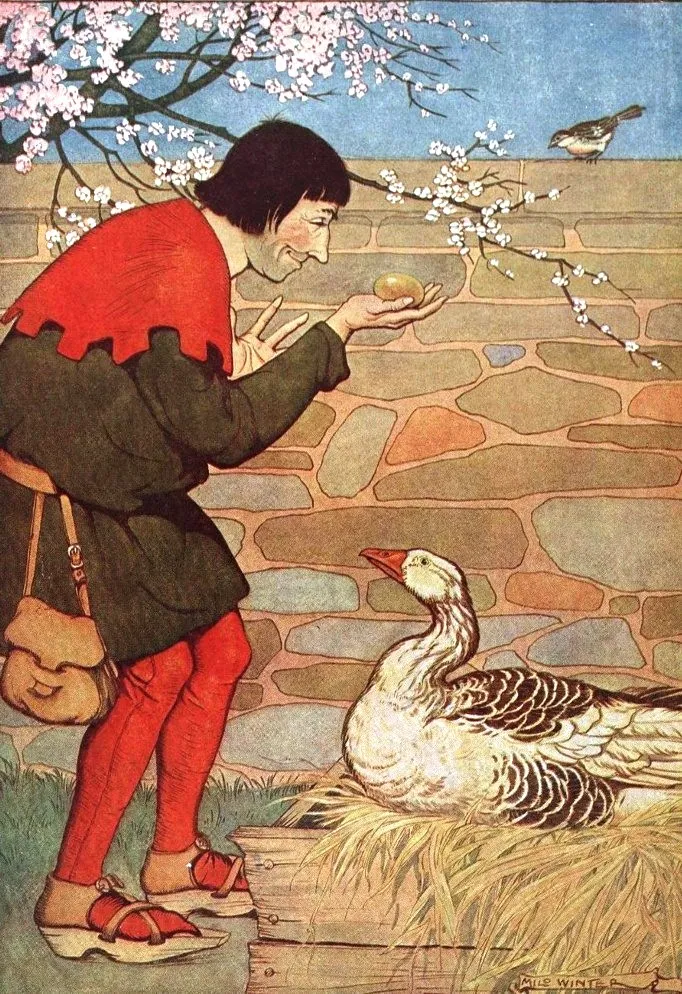
And yet knowing the remedy doesn’t quite settle the mind, because when you actually list the things holding you in place right now, not one of them is easy to let go. Your friends are there, your photos have piled up there, the way you work is fitted to it. To say the right to leave is the cure is also to say most of us can’t leave yet. So if a service that’s treating you unusually well just came to mind, that’s good news and also worth a question. Along those three stages — treat well, grind and hand off, finally squeeze — where is that kindness standing right now? While the farmer counts his golden eggs, the goose still knows nothing.