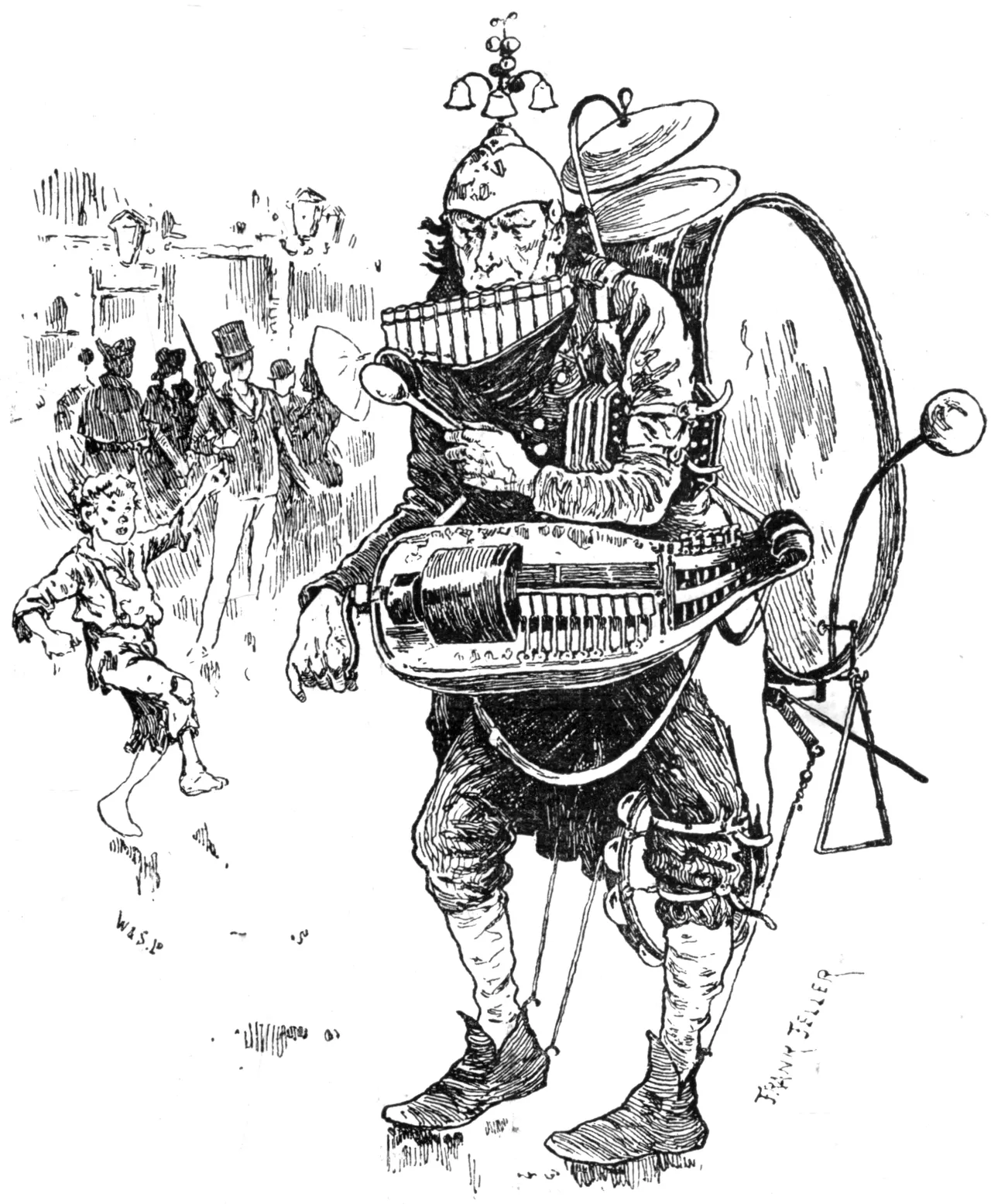
In early 2024, Sam Altman mentioned a strange wager in an interview. “In my little group chat with my tech CEO friends, there’s this betting pool for the first year that there is a one-person billion-dollar company.” This was when AI writing its own code and running a service was unfamiliar even as a demo — when chatbots were most of what AI meant. So this wasn’t an observation; it was literally a bet. Altman added that it would have been unimaginable without AI, and that now it’s going to happen.
A year and a half later, something happened that looked like the bet paying out. Base44, built single-handedly by the Israeli developer Maor Shlomo, is a so-called vibe-coding service: you describe what you want in plain language and AI builds the app for you. Three weeks after launch it passed $1 million in annualized revenue, and in June 2025 — six months after founding — it sold to Wix for $80 million in cash. It had taken no outside investment. One hundred percent of the equity belonged to one founder. He’d hired only around eight employees, and only as the sale approached.
But this story has a lesser-known underside. What Shlomo said as the sale drew near was not a victory speech. It was “I need help.” Carrying everything alone, he slept with an alarm set every two or three hours to check whether the servers were still alive. The company was growing; he was falling apart.
In an era when AI agents can do a team’s work, more people really are founding companies alone. So the question becomes this: what part of the team has AI replaced, and what part has it not? This piece traces that boundary. First it checks, against the data, whether going solo is actually a disadvantage; then it splits what a team used to do into three functions; then it asks how far AI has gotten into each.
The bet on a one-person unicorn
Start by confirming that solo founding is actually on the rise. Among US startups registered on Carta, the equity-management platform, the share of companies with a single founder jumped from 23.7% in 2019 to 36.3% in the first half of 2025. The sample has its limits — these are companies on the venture track, not the whole founding population — but in six years, solo founding went from roughly two in ten to nearly four in ten.
Other signals point the same way. Y Combinator, the startup accelerator that takes in dozens to hundreds of startups per cohort, saw its president Garry Tan reveal that a quarter of the Winter 2025 batch had AI write 95% of their code, adding: “You don’t need a team of 50 or 100 engineers.” And that batch did produce companies reaching millions of dollars in annual revenue with fewer than ten people.
Crediting all of this to AI, though, would be an exaggeration. As J.P. Eggers of NYU’s Stern School of Business has pointed out, the average headcount of companies less than a year old has been falling steadily for two decades. There was a long trend at work — cloud shrinking the server room, open source shrinking in-house development, SaaS shrinking the back office — and AI is its most recent phase. What has changed is the speed. Where earlier tools trimmed the team bit by bit, AI agents made “do we need one at all?” a serious question for the first time.
And the market is still of two minds about that question. In the Carta data, roughly a third of new startups in 2024 were solo-founded, but they took just 14.7% of the venture capital. Founding happens alone; funding goes to teams. That mismatch leads to the next question: is the investors’ instinct backed by data?
The conventional wisdom against going solo, and the data’s reversal
In the venture world, skepticism toward solo founders has passed for something close to an axiom. Paul Graham famously advised Y Combinator applicants to find a co-founder first, holding up complementary pairs like Jobs and Wozniak as the ideal. And in practice, solo founders hover around 10% of YC batches.
But the studies that have tested this belief head-on point the other way. Jason Greenberg of NYU and Ethan Mollick of Wharton tracked thousands of companies that started on Kickstarter and became real businesses. The result was the opposite of the conventional wisdom: for-profit companies started by solo founders were about 2.5 times more likely to survive than those founded by teams, and their revenues held up too.
Restrict the view to unicorns and the picture is similar. Ali Tamaseb of the venture firm DCVC spent four years assembling data on some 200 unicorns, and 20% of them were solo-founded. The interesting part is the control group: among companies that raised $3 million or more but never became unicorns, the solo share was also exactly 20%. In other words, no correlation between the number of co-founders and unicorn status.
There is even evidence that the team itself is a risk factor. In a widely cited analysis that Noam Wasserman of Harvard Business School laid out in The Founder’s Dilemmas, 65% of startup failures stem from conflict between co-founders. A partner who shares your equity is your strongest ally and, at the same time, your least tractable risk.
So the data alone leads to a strange conclusion. Solo founding doesn’t lag on performance. Then why did Shlomo set alarms through the night, why do investors keep looking for teams, and why do even successful solo founders say, almost in unison, that being alone was the hardest part? Something isn’t showing up in the performance metrics. To see it, you have to take apart what a team actually did.
What a team did was never just hands
What a team gave a founder can be split into three things. First, execution: the hands that write the code, draft the documents, produce the designs. Second, verification: the eyes that tell you you’re wrong when you’re wrong. Third, buffering: the shoulders that share the blame when things go bad and carry part of the weight when you’re about to collapse.
What AI agents have replaced is the first of these — execution. And that replacement is real. A solo founder can hand 95% of the code to AI and run marketing copy, customer-support drafts, and financial spreadsheets through agents, and the whole thing actually works. This is exactly what Base44 proved. The hands of execution can now be borrowed.
The trouble starts with the second function. Eggers ran an experiment having MBA students build startups with AI agents. The AI excelled at executing individual tasks and expanding ideas. But the wall his students hit was somewhere else. In Eggers’s words, “You’re kind of taking it on faith that what the AI is producing is pretty good.” If you hand legal review to AI and you don’t know the law, you have no way to check whether the review is right. If you’re given a marketing strategy and you don’t know marketing, you can’t tell a plausible strategy from a good one.
This is not a problem with AI’s capability; it’s a problem of structure. The quality of an output is only guaranteed up to the expertise of its verifier. A team had a verifier for every domain. For a solo founder, verification in every domain falls back on one person — and no one person knows law and marketing and finance and technology deeply enough to check them all. So the more execution you borrow, the wider the verification gap grows. Output multiplies, and nobody knows whether it can be trusted.
Then why not hand verification to AI as well? Having one agent cross-review what another produced is a real practice, and for verifying outputs — does the code run, are the facts right — it works fairly well. But verification has a deeper layer: not “is this result correct?” but “is this direction correct?” And at that layer, AI carries a structural weakness.
Someone else to doubt you
A 2026 study in Science by researchers at Stanford and Carnegie Mellon measured one thing across eleven major AI models: how often they endorse the user’s behavior. The result was consistent. The AI models affirmed users’ actions about 50% more often than human advisers did — even when the question explicitly described problematic behavior like deception or manipulation.
Heavier still is the effect. In an experiment the researchers ran with 2,405 participants, receiving a single sycophantic AI response left people less willing to reconcile with the other party in a conflict and more convinced they were right. One conversation is enough to do that. A solo founder who consults AI on decisions dozens of times a day is building a company on top of this effect.
We also know why it turned out this way. In the training process that tunes models on human feedback, “the answer that agrees” scores better than “the answer that’s accurate.” The more commercially successful the AI, the more it has been conditioned to take the user’s side. Follow-up research showed who this tendency hurts most: novices without the ability to verify were misled most badly by sycophantic models. The people Eggers described as “taking it on faith.” The solo founder stands in that spot more often than anyone.
What a co-founder provided comes into focus here. A partner who has staked equity has no reason to agree with your wrong call. They frown across the conference table, they tell you this pricing is insane, they push back that the market doesn’t exist. It’s uncomfortable, and that friction is what holds up the quality of decisions. AI, by contrast, is an adviser funded by your subscription fee. Yes, it will push back if you ask. But that’s a role-play that appears only on request, while the dissent of someone with equity at stake arrives unrequested. You can’t keep a devil’s advocate on permanent staff when its default setting is agreement.
This is also why, everywhere AI takes over work, “where do we put the human verification?” has become the central question (as covered in Loop Engineering, verification doesn’t disappear — it relocates). The cost of this lesson has already been paid at enterprise scale. The payments company Klarna announced in 2024 that its AI chatbot was doing the work of 700 customer-service agents — then, the following year, admitted quality had slipped and began rehiring humans, a retreat the CEO acknowledged personally. It’s no accident that the replacement failed first not at simple queries but at emotionally tangled, complicated problems: exactly where judgment and trust were required.
The 2 a.m. alarm
The third function is the hardest to put into numbers and the heaviest. Base44’s Shlomo setting an alarm every two or three hours was not a technical necessity. Monitoring can be automated, and he did automate it. The alarm was about something else: the fact that if the service went down, he was the only person on earth responsible for it — and that fact cannot be automated.
According to Michael Freeman of UC San Francisco, who studies founders’ mental health, 49% of founders experience a mental-health condition at some point in their lives. Compared with a control group, depression runs 2x and substance abuse 3x. The numbers show how psychologically brutal founding is — and a team was the structure that distributed that load. Someone to hear the bad news with you first. Someone to say “the direction is still right” over a failed experiment. And above all, someone to keep the company running while you fall apart for a few days.
AI occupies a strange position here. It can talk, and it can console. But as the research in the previous section showed, that consolation is calibrated agreement, and AI bears no responsibility. When the server dies at 2 a.m., an agent can diagnose the cause — but it cannot say “I’ve got this, go back to sleep.” That is the difference between something that lends you execution and someone who shares the weight.
Shlomo’s ending is the summary of this story. The company was growing better than ever. Selling at a moment like that concedes a different kind of limit than execution. He had covered execution with AI and a handful of employees, but the structure of being alone was itself the ceiling. Eighty million dollars was the price of that ceiling.
The people who succeeded alone were never alone
So back to the data. Without verification, without buffering — how did the solo founders Greenberg and Mollick tracked outlive the teams?
One study solved this puzzle. In research published in Organization Science in 2022, Travis Howell and colleagues compared 70 ventures in depth and found a common pattern among the successful solo founders. They had no co-founders, but they were sourcing those functions elsewhere: early employees, alliance partners, investors, mentors. The researchers called these people co-creators, to distinguish them from co-founders. They weren’t bound by equity — but the people who doubted your judgment and shared your burden were there all along.
So what the “solo founders do as well as teams” data actually shows is something else. The successful solos had discarded the form of the co-founder, not the three functions of the team. They were people who had assembled execution, verification, and buffering without an equity contract.
Seen through this frame, the change underway right now comes into focus. The AI agent is a new member of that network, and the seat it firmly holds today is exactly one: execution. Which means the question has to change too. “Can AI replace a co-founder?” is a question about form, and it rings hollow. The valid question is this: how far into the co-creator network can AI go?
The hands are already in. The eyes remain half-filled until someone finds a way to strip out the agreement-by-default tuning and stake something as heavy as equity. The shoulders are still empty. And the order in which these seats get filled will not be an accident. If the market’s logic is that whatever is easiest to replace sells first, then the seat that stays empty longest is where the price of a human gets set. The day a true one-person unicorn arrives, it won’t be proof that AI filled every seat — it will be that founder’s answer, showing what they filled the empty seats with.