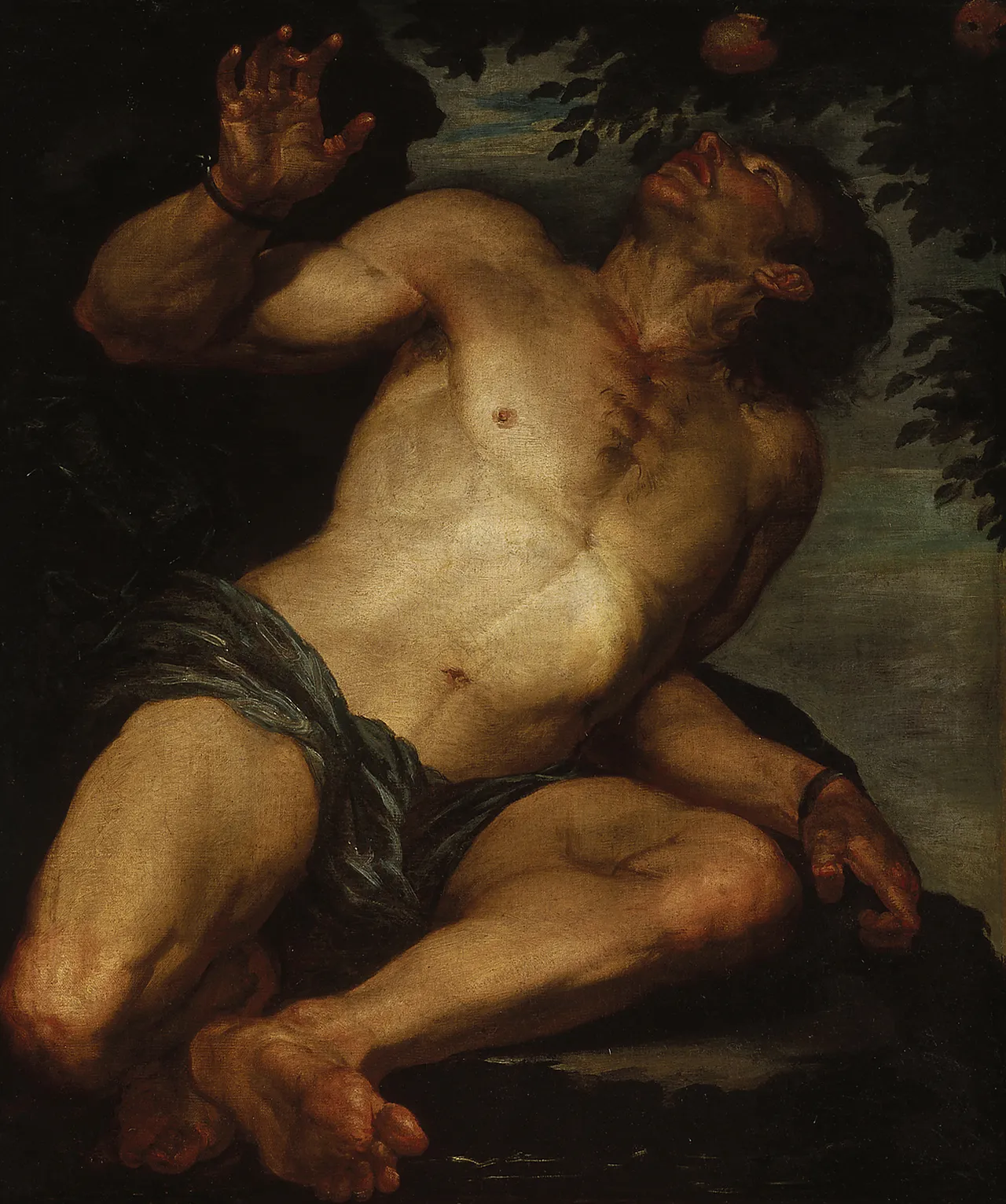
Dopamine usually gets called the “pleasure chemical” or the “happiness molecule.” Eat something tasty, dopamine fires, you feel good — that’s the story. It’s a tidy story, and it gets the core wrong. What dopamine does is not make you feel pleasure. It makes you chase. Feeling and chasing are run by different circuits inside the brain. Pull the two apart, and the map of what we’ve been calling happiness has to be redrawn.
The interesting part is that the structure neuroscience uncovered through dopamine was already named, almost 200 years ago, by a philosopher working from nothing but raw intuition. Schopenhauer called it the will (Wille). And the prescription Epicurus offered on top of that same structure turns out to look strikingly like the one neuroscientists hand out today. This piece uses dopamine as a thread to reread those two philosophies. (I worked through the synthesis of the two philosophies themselves in an earlier post, and the limits of Epicurean calm in the one before that. Here I lay dopamine over that frame.)
Dopamine runs the wanting, not the liking
The neuroscientist Kent Berridge spent thirty years stubbornly demonstrating one thing: inside the brain, wanting and liking are separate systems.
The experiment is simple. Give a rat something sweet and it makes a particular lip-smacking “liking” face, the same one a human infant makes. That serves as an objective marker of pleasure. Then you wreck the rat’s dopamine system. By common sense the rat should no longer enjoy food. The result was the exact opposite. The rat that lost dopamine didn’t want food. It wouldn’t go looking for food, wouldn’t even approach food right in front of it — to the point of starving. But put something sweet directly in its mouth and the “liking” face showed up just fine. The capacity to enjoy was intact; only the capacity to chase was gone.
Run it the other way — drive dopamine up artificially — and the rat wants the reward more fiercely, yet likes it no more once it has it. It chases more madly, not more happily.
The conclusion falls out of this. Dopamine is the thrust that gets the body up and moving toward a reward. Berridge called it incentive salience — coating some object in an “I have to have that” sheen of pull. The actual pleasure, the liking, is handled not by dopamine but by other substances like opioids, in a narrow patch of the brain.
Hold that one line and a lot of things click into place. Why you can stare at social media for an hour and feel nothing good. Why the moment right after you finally get the thing you wanted feels emptier than you expected. We’ve spent our lives mistaking wanting for liking — taking the keyed-up tension of the chase for happiness itself.
Finding Schopenhauer’s ‘will’ in the brain
Go back 200 years and Schopenhauer is waiting. What he saw as the fundamental reality of the world — the will — wasn’t an individual’s resolve but a blind, impersonal drive that keeps everything alive and forever craving. A force that wants with no purpose and no reason. Fill one desire and it immediately wants the next; filling isn’t the point — wanting itself is its nature.
Set that description next to Berridge’s wanting system. It’s nearly the same sentence. The wanting that dopamine pushes also knows no satisfaction. Since dopamine’s job is to chase, not enjoy, that sheen of pull slides onto the next object the moment you grasp the last one. Schopenhauer said we ride the will; neuroscience says we ride a dopamine circuit. Different words, same place.
What’s remarkable about Schopenhauer is that with no instrument for looking inside a brain, by staring inward and nothing else, he drew this whole structure up from within. He declared that a force that knows no satisfaction was real, and neuroscience, much later, located the circuit that corresponds to that force. Science measured, long after, what philosophy had intuited. You can’t nail down that the two are the same thing (I’ll come back to that caveat at the end), but the picture of the human they sketch overlaps to the point of being eerie. A creature that wants endlessly and is satisfied almost never.
Why the moment you fill it goes hollow: the neuroscience of boredom
Schopenhauer’s sharpest insight comes from here. He saw life swinging like a pendulum between two ends. One end is the pain of lack — not yet having what you want. The other is boredom — once you’ve got it, the will has nowhere left to go and runs empty. Fail to fill it and lack torments you; fill it and boredom hollows you out. The paradox is that emptiness begins at the very point where you have everything you wanted. This boredom has a name in neuroscience too: reward prediction error.
Wolfram Schultz’s classic experiment is the starting point. Give a monkey juice with no warning and its dopamine neurons burst. But train it so that a light always precedes the juice, and the moment of the dopamine burst shifts — not to when the juice arrives, but to when the light comes on. When the juice then arrives exactly as expected, the dopamine stays quiet. And if you flash the light but withhold the juice, at that moment dopamine drops below baseline.
The point is this. Dopamine doesn’t respond to the reward itself; it responds to the gap between expectation and what actually happens. Better than expected and it spikes, as expected and it goes silent, worse than expected and it sinks. In other words, dopamine works only during the chase. A reward already in hand, fully predicted, no longer lights it up.
Schopenhauer’s boredom is exactly this silence. The instant you get what you wanted, that object becomes a “predicted reward,” the dopamine signal cuts out, and all that’s left is the flat state after the tension of the chase is gone. We call that flatness emptiness. It’s the fade where something is clearly good for a few days and then quietly becomes the ordinary backdrop — what psychology calls hedonic adaptation, the thing usually known as the hedonic treadmill. The new car, the new job, the thing you coveted for ages — all drift back to baseline. The pendulum brushing the dead center of fulfillment and sliding right back out of it shows up, in the brain, as the dopamine signal dying down.
Pleasure and pain sit on the same scale
Schopenhauer went one step further. He insisted that only pain is positive and pleasure is negative. Pleasure isn’t a plus that exists on its own — it’s merely the spot a pain was briefly removed from. There has to be hunger for there to be fullness; without lack there’s no joy in filling. Pleasure isn’t a surplus piling up in your account. It’s closer to the relief of paying off a debt.
This dark metaphysics has a modern counterpart too. It’s the picture the psychiatrist Anna Lembke draws in Dopamine Nation. She sees the brain processing pleasure and pain on the same scale, a seesaw. Load pleasure on one side and the scale tips. But the brain is an organ bent on homeostasis, so to bring the tipped scale back level it lays a counterweight on the pain side. That’s why an intense pleasure is always followed by an equal measure of comedown, craving, discomfort. The withdrawal after a drug, the regret after a binge, the dazed blankness after scrolling short videos for too long — that’s the counterweight.
The trouble is that repeating the same stimulus leaves the scale tipped further and further toward pain, and stuck there. In Lembke’s account, that’s because the brain adapts to the excess of pleasure and dials down the sensitivity of its dopamine receptors. The baseline itself sinks, so what once delighted you now leaves you cold, and even just to get back to feeling normal you need a stronger hit. It’s a leaking jar. The jar Schopenhauer described as “no matter how much you pour, it never fills” is the one Lembke explains as broken dopamine homeostasis.
Schopenhauer’s thesis that pleasure is only the absence of pain — and Epicurus’s definition, exactly the same, that “pleasure is the absence of pain.” What two philosophers reached by pure speculation, Lembke redrew on fMRI scans and clinical patients. Happiness is not stacking up pluses but returning a minus to zero.
2026: machines that push the pendulum on purpose
If that’s the diagnosis, what suddenly makes it urgent is the age we live in. Epicurus divided desires into three. Natural and necessary (food, shelter, friendship); natural but unnecessary (luxuries); and empty and vain (fame, power, endless wealth). The one reason he warned against the last kind was a single thing: it has no end, so it is never satisfied.
Read through dopamine, it goes like this. A natural desire like thirst saturates with one glass of water. Drink and it’s over, and the dopamine signal subsides. The “empty and vain” desires, by contrast, have no saturation point. A like count, a follower count, the next video — the instant each arrives it becomes a “predicted reward,” the signal cuts out, and so it demands the next one at once.
And the technology of 2026 is packed with machines engineered to optimize exactly this endless desire. Infinite scroll, notifications, autoplay, short-form feeds are built on top of the reward structure behavioral psychology found to be most addictive. Variable-ratio reinforcement — never knowing when the reward will come — the very structure of a slot machine. The uncertainty of not knowing whether the next video will be good is what makes dopamine burst hardest. When the outcome varies every time, the reward rarely settles into “predicted,” so a large prediction error is held open at every pull. The “as expected” moment that put the dopamine to sleep in Schultz’s monkey never comes in a slot machine.
The dopamine circuit evolution handed us was built for an environment where berries and prey were scarce. What’s happening now is that someone deliberately designs endless stimulus and shoves it in front of that circuit — what ethologists call a supernormal stimulus. The “endless desire” Epicurus warned against 2,300 years ago is now a product a team of experts polishes a little smoother every day, inside your pocket. Left alone, the pendulum dies down on its own; these machines never let the weight off the far end.
Epicurus’s ‘subtraction’ is the very path back to dopamine
So Epicurus’s prescription suddenly reads like a neuroscience handout. His answer was subtraction, not addition. Not stacking up stimulus to grow happiness, but the equilibrium left when you clear away the things stirring your mind — ataraxia — which is already the peak.
Lembke’s prescription is subtraction too. As the first step in righting a broken scale she recommends a “dopamine fast”: staying away from strong sources of stimulation for a set period. This is what’s commonly called a “dopamine detox.” But that popular name misleads. Dopamine isn’t a switch we can flip off (without it we couldn’t even get out of bed), and it isn’t a toxin a detox flushes from the body. What actually happens is that lowering the intensity of stimulus restores the baseline. Cut strong stimulus for a while and the scale, fixed tipped toward pain, slowly comes back level. Then a glass of water, a walk, a conversation with a friend — weak stimuli — can give pleasure again. The sensitivity of the senses comes back to life.
This is precisely the neuroscience version of why Epicurus said bread and water were enough. Reduce the stimulus and you grow satisfied with little; satisfied with little, the pendulum’s swing goes shallow. A large desire breeds large lack and large boredom, but a small desire turns over shallowly. Epicurus’s classification of desires was, in the end, a map for sorting which desires saturate the dopamine circuit and which only stoke an endless thirst.
There’s a reverse direction too. As another way to right the scale, Lembke recommends pressing the opposite pain side on purpose — a cold shower, exercise, fasting: a measured pain you choose yourself. If it’s a scale where pain follows pleasure, then lay the pain down first and the rebound tips the scale toward pleasure. This chimes with Epicurus’s phronesis (practical wisdom). “Some pain returns as greater pleasure, so bear it gladly,” he said, actually recommending the hardship of exercise and the discomfort of restraint. The reckoning of “pay the pain if the price is right” gets rewritten, 2,000 years later, in the language of dopamine homeostasis.
The best hours are in the ripples, not the spikes
That doesn’t mean cut every pleasure and live on bread and water. Dopamine itself isn’t the bad thing; the question is what sets it off. On one side there’s the short, hard spike — the kind where the signal cuts out the instant it lands, demands the next at once, and drags the baseline down with repetition. Short-form video, gambling, the endless like — these belong here. On the other side there’s a long, gentle flow that comes from making, learning, tending something. The reward is spread evenly through the process, so it doesn’t burst all at once and then plunge; instead of toppling the baseline it builds a sustainable cycle.
This is where flow lives. Sink so deep into making something that the distance between “me” and “the thing I’m doing” goes to zero, and you step out, for a while, of the pendulum of lack and boredom. You’re not chasing one big payoff; the activity itself hands back a ripple of reward at every moment. Epicurus’s Garden was exactly that kind of device. Friends, a vegetable plot, conversation — not something you fill once and finish, but a cycle that keeps turning while you tend it. That he warned against fame and wealth yet spent a lifetime founding a school and writing isn’t a contradiction. He pulled his foot out of the leaking jar but poured everything into the bowl whose bottom he could see.
Where intuition meets measurement
Of course you can’t lay the intuition of philosophy directly over the measurement of neuroscience and call them one. The will is a metaphysical claim about the whole world; dopamine is a neurotransmitter measured in a specific circuit. Say one “proved” the other and you’ve misread both. And yet the fact that the picture of the human they draw overlaps this much carries weight. It’s as if one person, in fog, felt out the same mountain by hand, and another came up much later with a surveyor’s tools and marked the same peak.
The practical conclusion is unexpectedly simple. You can’t switch dopamine off, so you tame it. Keep your distance from the machines built to sell engineered spikes, and your baseline holds; recover your senses enough to find pleasure again in small things like bread and water; spend your best hours not on one big payoff but inside the quiet cycle of tending and absorption. Accept Schopenhauer’s dark diagnosis all the way down, and the conclusion still doesn’t have to be despair. Because you know the cliff is real, the garden you tend on top of it bends without breaking.
— tomte
Read next · Why Epicurean Calm (Ataraxia) Breaks Down in the Face of Passion · Schopenhauer’s Will and Boredom, Epicurus’s Calm: How to Tame Desire · Csikszentmihalyi’s Flow