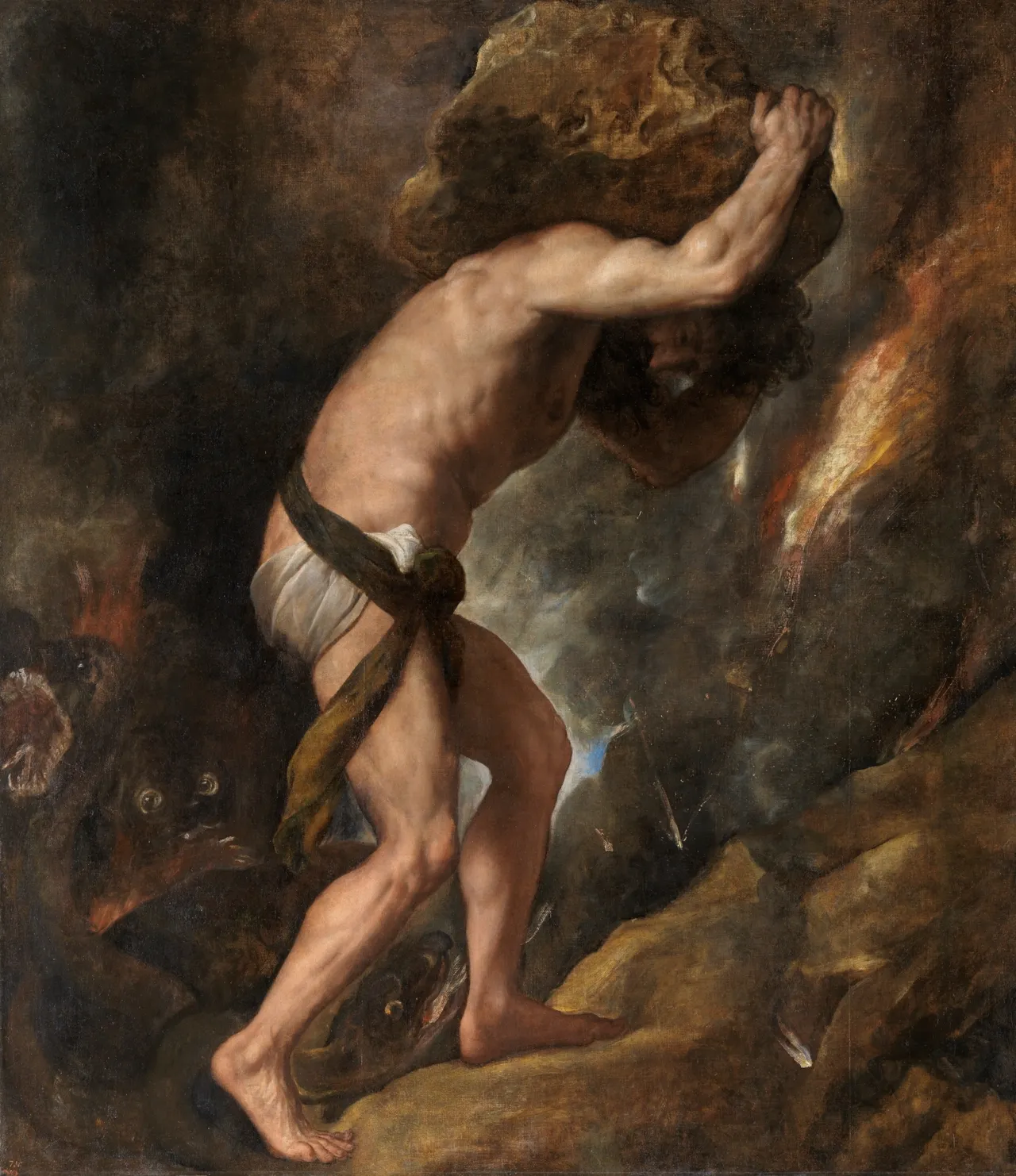
Picture a team on its first day. Problems are stacked up like a mountain, and everywhere you reach, a number moves. You push payment success from 78 percent to 90, you halve the signup flow, you cut response time in half. Setting goals is fun. Every goal you set feels within reach, and reaching it shows.
Now find that same team three years later. The people haven’t changed; if anything they’ve gotten better. Yet the goal-setting meetings have turned heavy. There aren’t many numbers left to lift, and the targets that do get set feel oddly flat. No one has slacked off, but the whole team runs lukewarm. The usual reading is that this is a motivation problem, or that people have gone soft. So you hold an offsite, repaint the vision, throw a dinner. And come Monday, nothing has changed.
The argument here is this. The fading momentum of an old team is a structural problem before it’s a problem of will. And the structure holds two distinct kinds of aging, tangled together. One is the aging of the problem space the team works on; the other is the aging of the people inside it. The two look alike at the symptom level and so get treated as one lump, but their causes differ — and so do their cures. Get the diagnosis wrong and the offsite spins its wheels every time.
The first aging: the problem space grows old
A new team, a new product, is covered in low-hanging fruit. Improvements you can reach by just stretching out an arm are scattered everywhere. Lifting payment success from 78 percent to 90 takes a single quarter. The numbers climb fast, and everyone feels each climb. It’s the season when goals are exciting on their own.
So what happens when that same team polishes the same domain for three years? Now success rate goes from 97.5 percent to 97.8. That 0.3-point gain costs several times the effort it used to, and once you land it, no one applauds. You get the exact curve economists call diminishing marginal utility. Early on it’s easy with big impact; in maturity it’s hard with small impact. The difficulty of a goal and its reward have flipped completely.
This, to me, is the root cause sitting at the bottom of it all. It looks like a motivation problem, but really the problem itself has aged. The people didn’t cool off; the vein thinned out. You mined a vein that ran thick for three years, so of course the same pick swung in the same spot turns up less. It isn’t laziness — it’s geology.
A second symptom follows. With nothing left to lift, the team’s goal quietly slides from raising to holding. Hold the success rate, hold zero outages, defend against churn. All of them holding goals. At first the shift looks natural, but there’s a trap in it.
A holding goal fundamentally cannot move people. The human brain fires a reward signal when you go from 0 to 1, when you cross over something. From same as yesterday it fires almost nothing. A setup where the best you can do is break even and the worst gets you blamed — the mode psychology calls loss aversion — makes people defensive and cautious. A game of not-losing can’t pull the same energy as a game of winning. That’s usually what’s really behind the picture of an old operations team going quietly tired.
The second aging: the people grow old
Set the problem space aside, and there’s still this: when the same people do the same work long enough, the drive drains from the people side too. The longest-surviving explanation here is self-determination theory. Laid out by Edward Deci and Richard Ryan, it holds that intrinsic motivation rises from three pillars — autonomy, competence, and relatedness. Carrots and sticks press from outside. The motivation that wells up from inside, by contrast, comes when those three are filled. Daniel Pink popularized this in his book Drive, recasting it as autonomy, mastery, and purpose.
The trouble is that in an old team these three fuels run dry not one at a time but all at once.
In a freshly formed team, people decide everything themselves as they go (autonomy), learn something new every week and feel themselves growing (competence), and the mission is vivid and alive (relatedness and purpose). But three years in the same seat, the way of working is already fixed and locked into process, the territory is already mapped so the learning curve goes flat, and the why has worn down into plain daily routine. All three fuels hit empty together.
That’s what makes recovery hard. Handing back a little more autonomy doesn’t resolve but why am I doing this?, and repainting the purpose doesn’t fill so what am I actually learning that’s new? Patch one gap and the absence of the other two only stands out sharper.
Frederick Herzberg’s two-factor theory adds another layer. Herzberg saw the things that dissatisfy people and the things that satisfy them as separate axes. Pay, benefits, rank, office politics — these are hygiene factors: when they’re lacking, discontent erupts, but no amount of them converts into motivation; the most they do is make discontent go away. Achievement, recognition, growth, responsibility, on the other hand, are motivators — only with these does the work become enjoyable.
The trap of an old team sits exactly here. As tenure accumulates, the hygiene factors — salary, rank, stability — generally improve. But the motivators, the new achievement and new learning, dry up because of the two agings above. So the common state of “the package clearly got better, yet coming to work isn’t fun” isn’t some mysterious mood swing; it’s precisely the spot the theory predicts. Not dissatisfied enough to leave, but not lit either — the most awkward lukewarmness there is to handle.
Finally, history piles on. An old team carries a stack of we set an ambitious goal and didn’t reach it. People remember that. Hand them a fresh stretch goal and the first thing that surfaces inside is here we go again, it’ll fizzle out. The trust capital invested in the very institution of “a goal” has worn thin. Give the same goal to a new team and they run at it in earnest, because that debt is zero; give it to an old team and half the air is already out before they start. It’s a faint version of what psychology calls learned helplessness.
Motivation is a product of environment, not will
Having named the two agings, one premise has to go down before we move to the cures. We tend to treat motivation as a matter of mindset — steel your will, rekindle your passion. But the center of gravity in organizational psychology shifted to the opposite side long ago.
Teresa Amabile had hundreds of office workers keep a daily work diary and analyzed that vast record. What single factor most swayed a person’s motivation and mood for a given day? Not a grand vision, not a bonus, not recognition. It was the sense of having moved one step forward in meaningful work today — what she called the progress principle. On days with clear progress, however small, people were the most driven and the happiest.
That finding throws the old-team problem into fresh light. A 0.3-point goal is too far and too large for any daily progress to be visible. You can work a whole month and no signal arrives saying today I moved a step. So of course motivation can’t live there. Put the other way: motivation isn’t extracted by nagging — it’s grown by designing the environment so that progress shows. Read the cures through that lens and what needs doing comes into focus.
Different diagnoses, different cures
The most common mistake is applying the same medicine to both agings. Prescribe a motivation event to a team whose drive has drained because the problem space aged, and you get a flicker on the day of the offsite and a flatter Monday. There’s nowhere for the lifted enthusiasm to go when there’s no problem to solve. The cure differs by diagnosis.
| What aged | Main symptom | First-line cure |
|---|---|---|
| Problem space | No numbers left to lift, goals slide to “hold” | Redefine the problem, or move to richer ground |
| People | Autonomy, learning, purpose dry up at once; lukewarm | Rotate people to reset the three fuels |
Unpack the cures a little further.
Redefine the problem. Instead of squeezing another 0.3 points out of the same metric, jump the goal into an adjacent space. If you’ve wrung payment success dry, extend payments into a new territory (overseas, offline, B2B), or point the capability that team built at an entirely different problem. You keep the team in place and swap out the mission. When the vein thins, you don’t swing the pick harder — you move the mine.
Turn “hold” goals into “reinvent” goals. If moving territory is hard, change the frame of the holding game itself. “Hold success rate at 97.8 percent” never motivates, but reframed as an efficiency goal — “the same result at half the cost, headcount, code” — the maintenance work becomes a mountain to conquer again. You give an ops team “cut incident response time in half” instead of “hold zero outages.” It’s translating a game of holding into a game of improving.
Rotate people. The strongest card, and the least played. Send the core people of an old team into a new domain and all three fuels of self-determination theory reset at once — new autonomy, new learning, new purpose — and learned helplessness loosens too, as the environment changes around them. The cost is the knowledge that leaks out as they leave, so rather than a wholesale swap, the realistic move is a cross: transplant one or two veterans as seeds into the new ground and transfuse in fresh people.
Restore the rhythm of small wins. This is the progress principle put into practice. Which is why nagging is barking up the wrong tree. Better to break a goal that’s too big and too far into pieces and give people one visible step forward each week.
The vein and the people
We say “they’re not what they used to be” about an old team far too easily, and we aim that arrow at the people. But in most cases the people are the same, or have grown more capable. What changed is the geology of the ground they stand on. The vein that ran thick has thinned, and the three fuels have dried together as the price of staying too long in one spot.
So reviving an old team is less about driving the people harder and more about finding them a new vein to mine, or carrying them to one. What cooled was the problem, not the people. Start the diagnosis there, and the offsite spinning its wheels every time at least happens less often.
— tomte
Read next · Csikszentmihalyi’s Flow: Where the Best Hours Settle, Between Boredom and Anxiety · How Org Structures Are Classified and Evolve: From Functional and Mission Teams to the Diamond AI Is Reshaping · Schopenhauer’s Will and Boredom, Epicurus’s Calm: How to Tame Desire