By their covers, Yuval Noah Harari’s three books — Sapiens, Homo Deus, and Nexus — are about different things. One is humanity’s past, one its future, one the history of information. But read them back to back and an odd suspicion sets in. Isn’t this man just saying the same thing over and over?
The suspicion is right. The three books are variations on a single idea — one idea that runs from the Stone Age to the chatbot. Reading a good thinker well starts with finding the one key they hold. So let’s follow it: what the key is, why it opens so many doors, and which door finally stops it cold.
One sentence: humans cooperate by believing shared fictions
Harari’s key reduces to a single sentence. Humans came to rule the earth not because we are stronger or smarter, but because we can collectively believe in things that don’t exist.
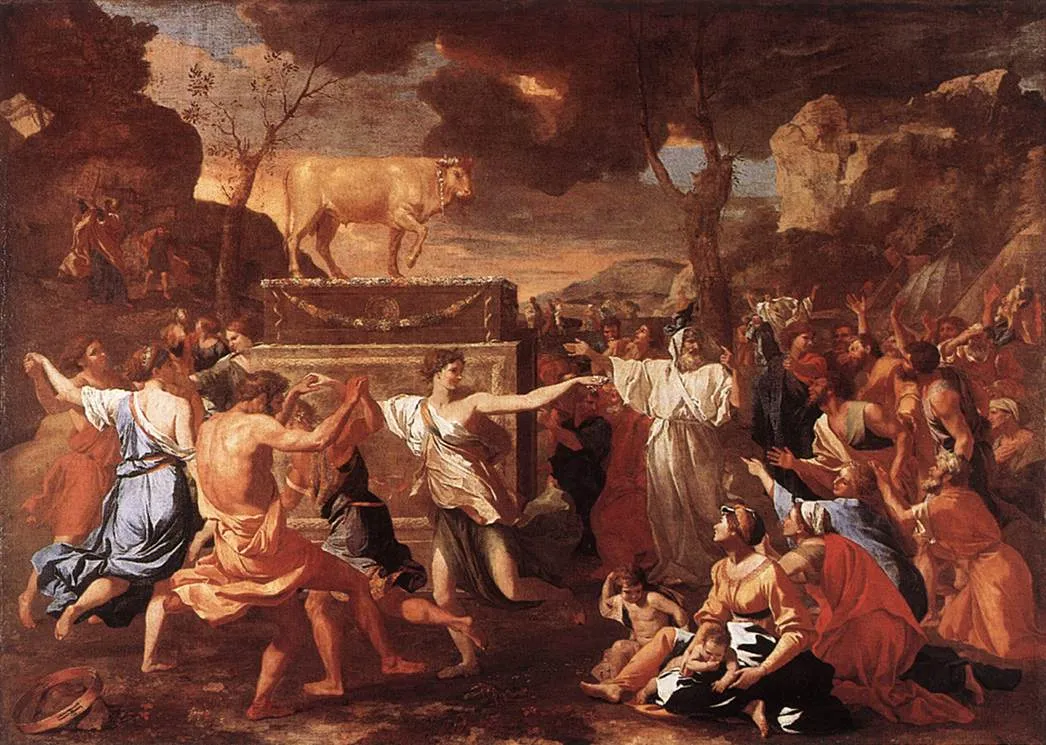
Other animals communicate too. A monkey will shriek “Lion — run.” But there’s something only Sapiens can do: have many minds believe, at the same moment, in something that isn’t there to see or touch — a guardian spirit watches over our tribe. A troop of chimpanzees can only cooperate as far as the few dozen who know each other personally. People who believe in the same god, the same nation, the same currency, by contrast, build cathedrals, raise armies, and trade with total strangers.
Harari calls the products of this shared belief intersubjective reality. Split the world’s existence into three layers and you can see exactly where the concept sits.
- Objective reality: gravity, a rock — things that are there whether or not I believe in them.
- Subjective reality: my headache — things that exist only inside one person’s head.
- Intersubjective reality: money, the state, gods, human rights, companies — things that exist only when many people believe in them together.
Money is the clean example. A banknote becomes a scrap of paper the instant everyone stops believing in its value. So do the state, the company, human rights. None of them exists anywhere physically. Yet as long as enough people believe, they hold up our lives as solidly as any rock. All of Sapiens is that one sentence, expanded. Civilization doesn’t rest on objective truth. Its foundation is an enormous fiction we agreed to believe together.
The same key, a second door: Homo Deus
Homo Deus turns the same key the other way. Where Sapiens asked “how did fiction lift us up,” this one asks “what happens when that fiction collapses.”
For the last three hundred years the fiction holding the world together was humanism. Its central doctrine: human feelings and choices are the highest authority. In politics, the voter knows best (democracy); in markets, the customer is always right (capitalism); in ethics, follow your heart (individualism). All of it rests on one premise — that inside me lives a true self with free will.
Harari thinks that premise is coming loose. The human that neuroscience describes is nothing like a soul possessed of free will. It looks far more like a set of biochemical algorithms run by neurons and hormones. Our feelings and choices, when you get down to it, are just the output of calculations those chemical processes ran. And if so, the humanist foundation — “my feelings are truth” — wobbles with it. The new belief moving into that empty space is Dataism: a worldview that exalts the flow of information itself as the supreme value and sees the human, too, as just one system processing data. Harari maps how authority migrates like this — from the age of asking God, through the age of asking your own heart, to the age of asking the algorithm. Once Netflix predicts what you’ll watch and the recommendation engine predicts what you’ll buy better than you do, people hand their decisions to the algorithm. The “sacred individual” humanism enshrined comes apart that way.
The subject shifted to the future, but the tool is identical. Free will, the individual — both, in the end, fictions we’ve believed together.
A third door: Nexus
The most recent book, Nexus, fits the key into AI. Its subtitle: “A Brief History of Information Networks from the Stone Age to AI.”
Here Harari breaks a common assumption. We tend to believe that more information brings us closer to the truth. He calls that naive. The essence of information isn’t truth but connection. False information, myths, propaganda — they bind people too. Often a simple lie binds harder than a complicated truth. It’s Sapiens’ “shared fiction” rewritten in the language of information.
On top of that, Nexus lays one genuinely new break. Until now every information technology — writing, the printing press, radio, the internet — was a passive channel that only carried information humans made. AI is different. It makes decisions on its own and generates new stories on its own. That’s why Harari insists “the computer is not a tool but an agent.” Inventing the fictions that bind a society used to be something only humans could do — and now the thing humans made has begun to do it.
String the three books on one line and it reads like this. Humans made fictions and came to rule the world (Sapiens); with that power they now try to redesign themselves (Homo Deus); and the AI they built becomes the first non-human agent to author fictions of its own (Nexus). With each book, the line between maker and made grows fainter.
The power of the key: why this lens is so strong
To travel this far on a single concept is a real achievement. The “shared fiction” key makes the things we usually take for granted feel strange all at once. Why does money work when it’s just a scrap of metal or paper? Collective belief. Why do only humans cooperate at scale? Shared fiction. Why is AI dangerous? Because the power to author fiction is leaving human hands for the first time. Questions that looked unrelated line up toward the same answer.
There’s a peculiar thrill in this defamiliarizing. Sentences like “the nation is imagined” and “human rights are a made-up story” flip the familiar world over and show you its underside. That sensation is part of what made the three books global bestsellers. Simple isn’t always shallow. To have reached this far on one key is, in itself, a virtue.
The door the key can’t open: the limits
But trying to open every door with one key comes at a cost. This is exactly where the experts fault Harari. It breaks into three.
First, lumping everything together as “fiction” goes too far. The philosopher John Searle calls things like money not fiction but institutional fact. A dragon in a novel doesn’t really exist; money really works as a social agreement and produces real consequences. The invented and the real-by-consensus are different. Cram both into the one word “fiction” and the important difference between them gets erased.
Second, the trap of reductionism. “Humans cooperate through fiction” is appealing, but cooperation rests on plenty that isn’t fiction — kinship, direct reciprocity, the trust between people who know each other’s faces. Try to explain all cooperation with fiction alone and you start quietly skipping the cases that don’t fit the frame. You shave the bumpy counterexample down for the sake of a smooth big picture.
Third, the danger of moral nihilism. If you call human rights and justice “just fiction,” doesn’t the ground for condemning a human-rights violation weaken along with it? Harari defends with “fiction, but useful fiction,” but his critics ask back: by what standard is something useful, and isn’t that standard itself a fiction? Flatten every value down to fiction and the solid ground to stand on disappears.
Harari knows this objection. So he concedes: “my book, too, is just one story.” Clever defense. But it’s also an escape hatch. Say “the very claim that something is fiction is itself fiction,” and every rebuttal spins in place. Apply a theory to itself and you fall into an infinite loop — a weakness shared by every grand theory of the form “everything is X.”
Reading by isolating the author’s one big idea
So the best way to read Harari is this. As a telescope for seeing vast patterns, he is the best there is. It’s just that the telescope has only one lens — “fiction” — ground into it, so the things that lens can’t catch (biological reality, the difference between institution and fiction, accident, material conditions) come through blurry.
This isn’t Harari’s problem alone; it’s a general skill for reading any big thinker. The better the author, the more they hold one powerful lens that cuts through the world. Find out what that lens is first, and two things become possible at once: enjoying, freely, what it brings into focus — and setting aside, separately, what it blurs.
“What is this person’s one big idea?” Hold that single question and you read at a distance from the author instead of being dragged along by them. What separates being persuaded by a book from dissecting one isn’t the amount you know; it’s whether you carry this question. Harari’s three books are an ideal text for practicing that dissection — precisely because he wields his single key so skillfully that the shape of the key shows all the more clearly.
— tomte
Read next · You Can Outsource Thinking, But Not Understanding